
Why Two People Never See the Same Painting
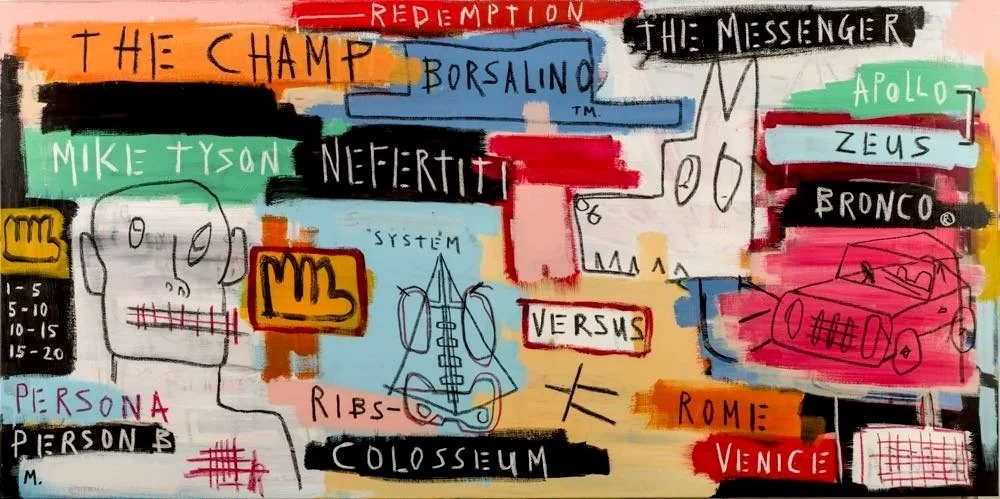
Put two people in front of the same painting and give them a minute. One notices the colour. The other finds a face hidden in the corner. One feels uneasy; the other wants to take it home. Neither has seen it incorrectly.
I have always been interested in that gap between what is on the canvas and what arrives in the viewer’s mind. A painting does not turn up alone. We bring our memories, our moods, our assumptions and whatever happened earlier that day. Sometimes we bring a very strong opinion about the colour orange. That’s allowed too.
Words in a painting complicate things further. Read one and your mind starts looking for a sentence. Find a familiar symbol and it begins to carry a meaning that may have nothing to do with mine. Meanwhile, the shape beside it might mean more than either of us can put into words.
That is part of what interests me about perception. We see, but we also interpret. We make connections. We fill gaps. We change our minds. In my work, images and language often share a surface without settling into one tidy explanation. I would rather leave room for a conversation than hand you an answer sheet.
It also means your relationship with an artwork can change. A detail that passed you by last year can suddenly become the part you cannot stop looking at. The work may be hanging in the same place, but you have arrived as a slightly different person.
Of course, there are facts about a painting: what it is made of, how large it is, when it was made. Those matter. But a list of facts cannot tell you exactly what it will do to you. That part happens between the work and the person standing in front of it.
So if you see something I did not intend, I am not going to pull out a red pen. Tell me. The question I find more interesting than “What does it mean?” is “What do you see?”